
Darla
Recent Posts
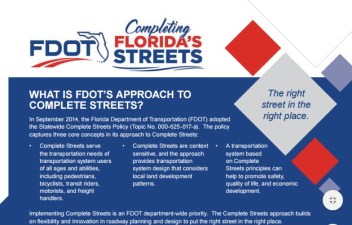
FDOT Delivers on Its Complete Streets Implementation Plan
| | No Comments
Kudos to FDOT for delivering on a major milestone of its Complete Streets Implementation Plan.

Action Alert: Support the Able Canal Trail Project in Lehigh Acres
| | No Comments
If you live, work, or play in Lehigh and support the proposed 5.5 mile pathway that will connect Lehigh Acres Trailhead Park, now is the time to make your voice heard.

Billy Hattaway honored as 2016 Complete Streets Champion of the Year
| | No Comments
On Jan. 27th, representatives from BikeWalkLee (Darla Letourneau and Margaret Banyan) traveled to Orlando to present Billy Hattaway with BikeWalkLee's 2016 Complete Streets Champion of the Year award. BikeWalkLee, along with the larger transportation world in SWFL, owes a great debt of gratitude to Billy for his tireless leadership and assistance in support of complete streets.Darla Letourneau and Dr. Margaret Banyan present BWL award to Billy Hattaway at Orlando City HallFOR IMMEDIATE RELEASEIssued Jan. 27, 2017Contact: Darla Letourneau, (239) 850-3219, dletourneau@bikewalklee.orgBikeWalkLee, a local community coalition advocating for complete streets in Lee County Florida, has selected Billy Hattaway, Florida Dept. of Transportation's (FDOT) District 1 Secretary (2011-2016) as the 2016 Complete Streets Champion of the Year for his visionary and passionate statewide and local leadership in support of complete streets and pedestrian and bicycle safety. Billy Hattaway“Today we honor Billy Hattaway as an outstanding champion of complete streets and pedestrian and bicycle safety throughout Florida, and specifically in Lee County, over the past decade," said BikeWalkLee’s Darla Letourneau. "Hattaway also initiated transformative change in FDOT’s design and operation of roads, shifting the focus from a car-centric culture to meeting the needs of all roadway users in a context-sensitive way. His six-year tenure as District 1 Secretary, along with his statewide leadership of FDOT's bike/ped safety campaign and its Complete Streets Implementation Plan, and his commitment to a balanced multi-modal transportation throughout his career, leaves a lasting legacy for the current and future generations of Floridians, county and city officials, local agencies, advocates, as well as the department itself," said Letourneau.Southwest Florida has benefited from having a nationally renowned leader of Secretary Hattaway's commitment and caliber assisting its communities over the past six years as they strive to implement complete streets and a more balanced multi-modal transportation system that is safe for all users. Hattaway’s willingness to assist in any way he was asked, both publicly and behind the scenes, has made a difference to the citizens of Lee County today and well into the future when some of these new transportation approaches will come to fruition.BikeWalkLee is grateful for its long-term partnership with Secretary Hattaway on many bike/ped safety and complete streets initiatives over the past nine years, first as a consultant on the Lee Metropolitan Planning Organization's first ever countywide bike/ped master plan, and then during his six-year tenure at FDOT. Since BikeWalkLee's inception in 2009, he has supported our advocacy efforts and included us as full partners with a seat at the table. His hands-on participation in local complete streets efforts, bike/ped safety campaign and events in Lee County, the Tice Community walking audit project, the Lee MPO TIGER grant, promotion and support for modern roundabouts, among many other activities, was instrumental in creating momentum for trying innovative approaches in jurisdictions throughout SWFL.He has exposed local leaders to innovative treatments such as roundabouts and road diets, context-sensitive complete streets, traditional neighborhood development, and the integration of land use and transportation planning. He also helped local officials, staff and community leaders navigate the paradigm shift that is occurring in the transportation world. Secretary Hattaway inspired and motivated many agencies, individuals, and organizations throughout Southwest Florida and statewide to become champions of complete streets and livable communities, resulting in an expanded local bench of champions that can carry the torch forward, another of his lasting legacies.Secretary Hattaway left FDOT at the end of November 2016 to become the Director of Transportation for the city of Orlando. While his FDOT leadership will be greatly missed, we are confident that the Complete Streets Implementation Plan for FDOT he launched in 2014 will meet its completion date of February 2018, integrating a complete streets approach into the fiber of FDOT's policies, guidances, and way of doing business, thus institutionalizing the many changes he undertook during his tenure."BikeWalkLee is deeply grateful to Secretary Hattaway for his many contributions to the complete streets movement across the country, throughout Florida, and especially in Southwest Florida,” said Letourneau. “The city of Orlando is lucky to have Billy as its Transportation Director, and we are confident that his contributions to the complete streets movement will continue in his new post." # # #BikeWalkLee is a community coalition raising public awareness and advocating for complete streets in Lee County—streets that are designed, built, operated and maintained for safe and convenient travel for all users: pedestrians, bicyclists, motorists, and transit riders of all ages and abilities. Other information, statistics and background is available online at www.BikeWalkLee.org. Also see our blog at http://bikewalklee.blogspot.com, and look for us on Facebook & Twitter.
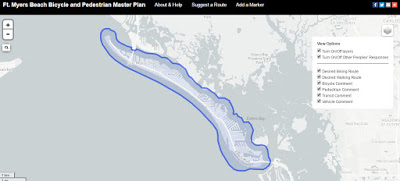
Want to Improve Walking and Biking in Fort Myers Beach? Share Your Ideas Online
| | No Comments
The Ft. Myers Beach Community Input Map is the first step in a larger effort to improve walking and biking.
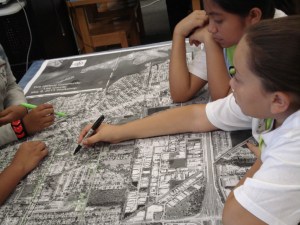
Walk Audits Provide “Roadmap for Improvements” for Tice and Dunbar Communities
| | No Comments
Over the past year, BikeWalkLee, FGCU, and Goodwill Industries have been working with residents of the Tice and Dunbar neighborhoods to assess their walking and biking environments.
Patience Pays Off for Fiddlesticks Blvd. Community
| | No Comments
What does it take for a neighborhood to improve its biking/walking infrastructure? Tireless champions, a committed community and patience… lots and lots of patience.
Bonita City Council Considers Bonita Beach Road Corridor Vision Study
| | No Comments
At the May 18th Bonita Springs City Council meeting, Ian Lockwood of the Toole Design Group presented the results of the Beach Beach Road visioning study, requested by Council last year. The study, the result of a series of public workshops this winter, resulted in a proposed vision for this corridor that is a complete streets approach, complete with roundabouts, separated bike lanes, sidewalks, lane width reductions, more inter-connectivity of local streets, and attractive landscaping throughout. Council members were enthusiastic about the vision. Lockwood said the biggest challenge ahead was the need for cooperation between the city, Lee and Collier Counties, and FDOT. In terms of the immediate priority, he suggested that the City work to preserve the existing road network so that it remains available to create the connected street network envisioned in the vision study.The next step is for Toole to submit a final report, which will be available on the City's website. At the June 1st Council meeting, the Council will consider a proposal to extend the contract with Toole Design, which would include having them play a "quarterbacking" function for all the related projects currently underway in the city.Video of May 18th Council meeting (Toole Design presentation during first hour of meeting) Toole Design's PowerPoint presentation to Council For background see our previous blog post: BWL blog 2/28/16 post:"A vision for the Bonita Beach Road corridor beginning to take shape" Below is the Naples Daily News May 19, 2016 article about the May 18th Council discussion: Bonita Springs City Council hears plans for busy road , by Patrick Riley.After years of traffic on Bonita Beach Road, Bonita Springs has a road map that could make the 7.5-mile east-west corridor safer and more attractive and efficient.On Wednesday, Toole Design Group — a planning, engineering and landscape architecture firm with headquarters in Maryland — presented the City Council with a Bonita Beach Road plan that includes roundabouts, separated bicycle lanes and pedestrian-friendly streetscapes.The goal is to transform Bonita Beach Road from its "freeway-like" appearance to a "town-like" road, especially near the beach and the city's downtown area, said Ian Lockwood, regional office director at Toole Design's branch in Orlando."There's other places like the commercial area and the (Interstate 75) area, which has a slightly different scale, but on the edges we still want it to be friendly for the bikes and pedestrians," Lockwood said.The corridor connects Bonita Springs' beach to its only I-75 exit and — despite running six lanes wide at its broadest segment — is prone to traffic jams and slowdowns.Toole Design's plan proposes five roundabouts — three in the Old 41 Road area and two near the beach.The roundabouts, Lockwood said, would save drivers gasoline because they're idling less, reduce pollution and noise levels, and allow pedestrians to cross the street in a safer manner.They also dramatically reduce the risk of accidents by allowing cars to flow steadily and at safer speeds, he said."Nobody speeds up for a roundabout," Lockwood told the council. "But I imagine everybody in the room has had a stale green light in front of them and thought, 'Maybe I should speed up so I don't get caught at the red.' And that's how people get injured and killed."Toole Design's proposal also includes landscaping upgrades along the corridor and the addition of bicycle lanes.Though the council has yet to adopt Toole Design's vision for Bonita Beach Road, councilors lauded the plan."As many of us know, the original comprehensive plan for Bonita Springs from the year 2000 had a vision that said (Bonita) Beach Road should be a beautiful, commercial parkway," Deputy Mayor Peter O'Flinn said. "This is a huge step, 16 years later, toward that."
2015 Florida Legislative Session Disappointing for Safety Advocates
| | No Comments
The Florida 2016 Legislative Session ended on March 11th, and was a disappointment for bike/ped and safety advocates, esp. the failure to pass the Vulnerable Users safety bill (aka the Passidomo bike safety bill).Background In October 2015, BikeWalkLee sent a letter to the Lee County State Legislative Delegation, outlining our requests for the coming session and we followed up by testifying at the annual Lee County Legislative Delegation in Oct. 2015. In February, BikeWalkLee issued its 2016-17 priorities, which re-affirmed how state legislators could assist in addressing major bike/ped safety issues in Florida. Several times throughout the session, BikeWalkLee communicated its views to the Lee Legislative delegation (see below). 2016 FL Legislative Outcomes for Bike/Ped bills: Below is an assessment of how legislation we supported or opposed fared: 1. Vulnerable Users Safety bill (HB 231/SB 332): This bike safety bill was BikeWalkLee's top legislative priority both this year and last year. While Rep. Passidomo worked hard to get this bill passed, Rep. Oliva (Miami)'s amendment in the last committee removed some important provisions in the House bill; and in a Feb. 20th letter to the delegation, we urged our members to support the Senate version of the bill (SB 332).According to the Florida Bicycle Association (FBA)'s March 14th report (from their Tally lobbyist, Capitol Alliance Group), "During the last week of Session there was a successful attempt by the House to add the vulnerable road user language to one the “Transportation Trains” (HB 1394). HB 7061 ultimately became the official “Transportation Train” however our vulnerable road user language was not included in Senator Brandes’ strike-all amendment due to continuing disagreements between the two chambers. The vulnerable user language in Rep. Passidomo's bill was included in one of the last two transportation bills on the special order calendar in the Senate on Friday. However, the bill had too many amendments and the House did not want to take it up. Consequently, the language did not pass. We worked closely with the Rep and Senator Richter to try to get it done, but the House and Senate only passed one major highway safety bill and it had very little in it. Passidomo indicated she would refile the bill next year with more targeted language. The whole motorcycle issue was also one of the hang ups she wants to avoid next year.... After conversations with Representative Passidomo, we remain confident in successfully passing language to protect our cyclists next session." We also received additional insights from advocate Tish Kelly (wife of Chuck Kelly, the cyclist seriously injured who is Passidomo's law partner) who has spent the last two years working closely with the bill's sponsor, Rep. Kathleen Passidomo, to get this bill enacted. She reported that Senator Altman (the sponsor of SB 332) dropped the ball by never getting the bill on the Senate floor agenda. Rep. Passidomo worked hard with two other Senators to get it on the agenda at the last minute; however, by the time that was done, the House wasn't hearing any more bills the Senate was sending over, so the bill died. 2. FBA funding. In February, in a surprise move, Senator Brandes offered an amendment which was attached to SB 7062, which eliminated FBA from receiving any of the proceeds generated by the Share the Road license plate. The FBA team successfully spearheaded efforts to restore this funding, and BWL sent a letter on Feb. 14th urging the committee to delete this provision. This was good news for the bike/ped community since these funds are used by FBA for their bicycle safety outreach program; however, we just succeeded in keeping a bad thing from happening, not making progress to make Florida safer for walkers and cyclists. 3. Distracted Driving. Another of BWL's longstanding legislative priorities has been to strengthen the laws against distracted driving, esp.to strengthen the 2012 ban on texting while driving by making it a primary offense. Bills were introduced (SB 328 and HB 537) to make it a primary offense but they didn't move. There were several bills dealing with enhancing penalties for drivers violating the texting ban in school zones but those bills died, too. 4. Other bike/ped safety bills. There were several other minor bills proposed related to specific issues (e.g. lighted bicycle ways, safety paths to school program, and guardrail safety) but all of them died. Report by Darla Letourneau Links to related blog posts:FBA's full 2016 Legislative Report (add)BWL's 2/14/16 letter in opposition to Sen. Brandes amendment excluding FBA from Share the Road license plate proceeds. BWL Blog, Feb. 20, 2016: BikeWalkLee urges Lee State Legislative Delegation to support Senate version of Passidomo's Vulnerable Users safety bill.BWL Blog, Oct. 17, 2015: Lee MPO sends letter to Lee Legislative Delegation in support of Bike Safety Bill (HB 253) BWL Blog, Oct. 12, 2015: BikeWalkLee asks Lee Legislative Delegation to strengthen bike/ped safety laws BWL Blog, Sept. 29, 2015: Rep. Passidomo refiles bicycle safety bill BWL Blog, March 25, 2015: Update on HB 231: Rep. Passidomo's bike safety bill BWL Blog, March 7, 2015: News-Press Editorial: Cyclists deserve to be protected, safeBWL Blog, Jan. 23, 2015: The birth of a bill to protect cyclists, walker
Connectivity Critical When It Comes to Cycling
| | No Comments
Connectivity of our bike/ped network is critical to safety and accessibility, and is the key ingredient for encouraging more people to bike and walk. Our column contrasts what is happening in Cape Coral and Fort Myers. BikeWalkLee Column in News-Press "Go Coastal" section, Dec. 10, 2015 http://www.news-press.com/story/life/outdoors/2015/12/09/connectivity-critical-bike-walk-lee-cape-coral-mass/77033192/ (Photo: news-press.com)Why does connectivity matter in cycling and walking? For the same reason that the whole is usually greater than the sum of its parts.Having great facilities in isolation may be good for those people who want to ride or walk only in that area. But what about those who want (in particular) to ride somewhere to enjoy a good bike path? Or who want to be able to actually DO things – such as commute, shop, get to appointments – by bike without having to take their lives in their hands on local roads not built to accommodate cyclists?When isolated bike lanes or paths are linked together by simply adding a few miles of paths, all of a sudden a bunch of smaller facilities become a good-sized, usable network – and the opportunities to bike places multiply exponentially.Want to see that in action? Look at Cape Coral, where Cape Coral Bike Ped’s considerable efforts with the city to link existing segments created a 90-mile network almost overnight – which recently helped win the city a Bronze Bike Friendly City designation and a lot of attention.Want to see it not being done? Look at downtown Fort Myers, which desperately wants to be bike friendly and has made some investments in facilities to encourage cycling. However, if you want to ride to downtown to enjoy those improvements, be prepared for a lot of honking and sidewalks unless you know the back streets and are willing to meander… because there are no good bike paths or lanes leading downtown in almost any direction (you can safely traverse the Edison Bridge if your legs are up for the climb).The city missed a chance to correct this mistake by not including any bike improvements in the planned renovation of McGregor Boulevard set to begin soon. That means cyclists either have to brave the narrow driving lanes (curbed to add even more excitement) or join the pedestrians and (illegal) golf carts on the narrow sidewalks…. or they have to haul their bikes downtown, unload them to enjoy a ride, then reload and return home by car.So Fort Myers may be where people should be riding their bikes, but over time Cape Coral may be where people actually ride on a daily and consistent basis – because, thanks to a sufficient and safe bike network, cyclists will actually be able to get there from here (wherever here and there may be).Turning to a different kind of connectivity, this time of year a lot of people like to admire the artistic (and often awe-inspiring) efforts of homeowners who go all-out in outside décor for the holidays.Whether tastefully done or seriously over the top, holiday decorations are often quite a show – and there’s no better way to see them than on a bike or on foot.Bikes are good because you can cover more ground while still proceeding at a pace that lets you take it all in, but you really need a good set of lights (front and back) to keep everyone safe. A walk can be a more impromptu thing – grab a flashlight and go – and either activity will help you burn off a few of those holiday calories.Even better, however, these excursions by bike or on foot can get you back in touch with your neighborhood (and your neighbors, if they’re out taking in the sights and lights themselves) while taking you away from the usual frenzy of family and festivities. It’s a great break in the day and a great way to see nearby decorations (or even those not so nearby, if you’re willing to go a little farther).You have two Critical Mass rides to choose from -the traditional Fort Myers fun ride or the new Cape Coral ride. (Photo: Courtesy of Critical Mass)Feeling really ambitious? Decorate your bicycle and become part of the festivities as you ride. The Caloosa Riders regularly roll out the lights for their annual Christmas Ride; you’d be surprised what they (and you) can accomplish with a couple of strings of battery-powered lights and a little imagination.Whatever your reason, get into the season… and escape some of its stress with a ride or walk today.BikeWalkLee is a community coalition raising public awareness and advocating for complete streets in Lee County—streets that are designed, built, operated and maintained for safe and convenient travel for all users: pedestrians, bicyclists, motorists, and transit riders of all ages and abilities. Information, statistics and background online at www.BikeWalkLee.org.Ready to ride or run?Run: Break up your holidays with a run… either the Santa Stroll 5K run/walk at Sugden Park in Naples (www.eliteevents.org) or the longer Knights of Charity 10K in Estero (3dracinginc.com).Ride: You now have two Critical Mass rides to choose from… the traditional Fort Myers fun ride (on Friday Jan. 1, rolling out at 7:15 p.m.) or the new Cape Coral ride (just as fun and family friendly, this month at 7:15 p.m. on Saturday, Dec. 26).Both: Tri for the holiday spirit at the Christmas Sprint in Naples on Dec. 20, or keep training for the HITS Naples Triathlon Weekend on Jan. 9-10.#BeSeenLee: To keep people safe at night while biking, we’re working to provide free bike lights to those unable to afford them (but who have to ride at night). BikeWalkLee partners (such as including Pawnbroker Marketing and Billy's Bikes) will be coordinating events during this campaign. Be sure to watch the BikeWalklee Facebook and Twitter pages for more #BeSeenLee event announcements and details.
BWL Column: Good News for Lee County Bikers and Walkers
| | No Comments
Today's column reports on the progress that has been made over the past 4 years (2010-2014) in adding biking and walking facilities throughout Lee County, based on BikeWalkLee's new report. Example Before/After photo provided by BWLBikeWalkLee's Column:News-Press Go Coastal Section, Oct. 1, 2015 How is Lee County doing in bike/ped facilities? Good — in total miles and in kinds of facilities. BikeWalkLee took a look at how bike/ped facilities added in up the county from 2010 to 2014, using data collected by the Metropolitan Planning Organization (MPO) from the Departments of Transportation for Florida and Lee County along with local municipalities.In this four-year period, we added 130 miles of bike/ped facilities, an 18 percent increase, with almost 40 miles of new facilities in Cape Coral and almost 60 miles in unincorporated Lee County.The greatest increase in type of facilities over this four-year stretch came in bike lanes — with the total mileage almost doubling to make up 1/4 of all facilities by 2014. Even with a drop in the miles of paved shoulders — the result of some road sections being upgraded to some other type of (more protected) facility — on-road facilities increased by 60 miles while off-road ones (in some cases more focused on walkers) added 70 miles. Overall, good news for bikers and walkers countywide. Much of these gains came due to new-road construction rather that retrofits to existing roads — where a huge backlog still exists. We applaud the efforts of local officials (county and municipality) to achieve these kinds of improvements, and urge them to keep up the good work to continue to expand and connect the bike/ped network throughout the county and its cities. Every day we’re reminded of the importance of walking and biking to improving the overall health of the community, so more and safer bike/ped facilities are crucial to encouraging people to go take a hike or a bike!The BikeWalkLee report also reviews other bike/ped improvements during this period, as well as looking ahead at expected upgrades we all should see soon. The full report is online at BikeWalkLee.Ready to ride or run?Run: October race season is here, starting with the Lexington Cares 5K Run/Walk on Saturday to benefit the Regional Cancer Center’s Breast Health Center. The following weekend, pick from the Busey Bank Run for Prevention in the morning (at FGCU) or Cops and Joggers in the evening (downtown Fort Myers).Ride: Tomorrow is the first Friday of the month, which means the SW Florida Critical Mass ride, starting at the field next to the downtown Publix at 7:30 p.m. Bring your lights and helmet, and join the fun.Both: Looking for a sprint tri? Head north to Siesta Key on Saturday (www.siestakeytriathlon.org), or south to Marco Island on Sunday (www.thefitnesschallengetriathlon.com).
BWL Column: Southwest Florida Has Plenty of Bike/Walk Successes
| | No Comments
In response to the News-Press June 14th feature story, "Political will is needed to make cycling safer", today's BikeWalkLee column focuses on some of the successes in SWFL and the work ahead. BikeWalkLee Column in June 25, 2015 News-Press "Go Coastal" Section Photo: Andrew West/The News-Press / Andrew West/News-Press How do we make Southwest Florida better for biking and walking? Plenty of ways can be found by looking at how other areas have improved their bike/walk climate — but we can also find inspiration right in our own back yard.The latest in the “Share The Road” series which ran in the News-Press June 14 spotlighted seven cities across the nation that have taking major steps to improve the biking and walking conditions there, from improving facilities to enhancing education to gathering better data. All took a unique approach to addressing a common problem, which is the lesson we all should draw from their example — not to duplicate their efforts, but to decipher them to discern how they worked in those circumstances.The path to better biking and walking in Southwest Florida will be similarly unique in both its approach and implementation, with solutions likely tailored to fit the special needs and demands of our area, its residents and visitors. To see this in action, one need look no further than the four local examples called out in the series of articles:•Sanibel: Sparked by moms worried about their kids biking around the island, the city’s now-extensive shared-use paths grew in response to tourism (people liked not having to rely on their cars all the time) and transportation (when you can make better time in season on a bike than in a car, that can inspire a number of new riders).•Naples: Combine the desire to revitalize some downtown streets with a new and growing health initiative, and you’ve got a recipe for better biking and walking. The Blue Zone Project, which promotes community efforts to encourage healthier living, is coming on strong in Naples, which should spark bike/walk improvements as a logical outcome.•Bonita Springs: Downtown revitalization is also a driving force here, as a way to showcase the unique riverfront assets of the town while also working to draw people back (or introducing them) to downtown businesses by making the area more walkable and bike-friendly.•Cape Coral: A public-private partnership based on tourism and tying together the existing bike facilities has resulted in a major campaign to mark and promote more than 90 miles of lanes and paths as a major draw for both residents and tourists.See the themes — promotes tourism and transportation, good for the economy and good for your health. Stir in a welcoming climate (yes, it’s hot now… but it beats riding in a snowstorm!) and an unending stream of potential riders and striders (in visitors and residents), and you could have a success story in the making.Yes, there are obstacles… gaps in existing facilities, a continuing shortfall in funding to construct long-sought projects, and a built environment that often seems hostile to cyclists and walkers. And it is a “chicken and egg” situation… some people want to see strong usage before they’ll commit necessary resources to improvements, which are crucial to getting more people out biking and walking.But we can point to some progress locally as we look longingly at what other areas have accomplished — and, as we can continue to build on local successes, more demand will spur more supply. It’s doesn’t need to be major projects… something as simple as wayfinding signs or painted marking to delineate bike/walk facilities or enhance safety at intersections can make a big difference.We’ve seen steps in the right direction but, as the News-Press vignettes underscored, other communities have gone much further — in both infrastructure and innovation — to enhance their walkability and bike-friendliness.Who knows? Maybe — just maybe — if we keep moving forward on the bike/walk front, someday folks will hold up this area as a shining star in bike/walk successes.BikeWalkLee is a community coalition raising public awareness and advocating for complete streets in Lee County—streets that are designed, built, operated and maintained for safe and convenient travel for all users: pedestrians, bicyclists, motorists, and transit riders of all ages and abilities. Information, statistics and background online at www.BikeWalkLee.org.Ready to ride or run?Run: Celebrate the Fourth of July on the run, with morning 5Ks scheduled for Cape Coral and Bonita Springs. Details for the Cape event at www.ftmyerstrackclub.com and for the Bonita run at www.3dracinginc.com.Ride: Go slow and enjoy the show at the July 3 SW Florida Critical Mass ride through Fort Myers, which gathers near the downtown Publix around 7:30 p.m. Lights (front and rear) required, helmets recommended. Planning ahead? Then sign up today for the July 12 Wings and Wheels ride in Punta Gorda at www.peaceriverridersbicycleclub.com. Lots of distances and events to keep everyone engaged.Both: Want to try a tri? There’s a traditional sprint or a dualthlon (run/bike/run) at Sugden Regional Park in Naples on Sunday, July 12 (www.eliteevents.org).
Cape Coral’s Bimini Basin Visioning Process
| | No Comments
Exciting conversations are going on in our local communities about how to revitalize and redevelop our civic cores. BWL's Ann Pierce reports on one of these--Cape Coral's visioning process for the Bimini Basin.By Ann Pierce 5/1/15Ann PierceLook out Fort Myers; Cape Coral is coming after you! Such was the good-natured introduction last Thursday by Mayor Sawicki to the final community presentation of the Bimini Basin Redevelopment Visioning Process. Fort Myers’ beautifully redeveloped downtown has become a local model of revitalization, but if these plans in the works for Cape Coral are realized, it will be the model to beat. Over 300 interested and enthusiastic Cape Coral citizens crowded into the standing-room-only presentation given by fifteen advanced design students from USF’s School of Architecture and Community Design. In three teams of five, the students presented a beautiful series of development variations informed by researching the City’s previously commissioned plans and soliciting citizen input during a well-attended Charrette and midpoint-review meeting in January and March. Mayor Sawicki discusses plans with Cape residentEven with distinct creative differences there were common themes that ran strongly through the individual plans. The future city depicted by these millennials was decidedly different from that of the previous generation - this was definitely not your father’s city. Yet the vision of pervasive open public spaces; greenscaping; active transportation; minimization of the presence of automobiles; human-scale, mid-rise structures; and vibrant, diverse city life seem to get a positive reception from the audience of aging Baby Boomers. With a strong emphasis on “The Outdoor City” and maximization of water and view and access as a public asset to be preserved, each team proposed accommodations for business, entertainment and residential districts. From Class A office space to mid-rise, mixed-use, multifamily residential, to a basin-encircling boardwalk, each plan emphasized strong connections to active outdoor living with community-wide networks of shaded greenways for walking and cycling, connecting every district to the other and to the water's edge. Local architect Joyce Owens discusses plan with USF presenterBanished were the massive seas of asphalt parking lots, storm water retention ponds and forlorn transit stops. With an emphasis on walkability and active transportation, each plan featured rich cityscapes of multi-story buildings with retail and open air restaurants on first levels and office, studios or residential space above. A continuous flow of shaded walks and linear parks knit the community together. With this emphasis on connective walkability, was an equal de-emphasis of automobile primacy. Streets were to be narrowed or ‘right-sized’ and traffic slowed, sidewalks and bike lanes installed or widened and parking directed to on-street or multistory garages. A truly multimodal transit hub with bus access, bike share stations and kayak rentals was envisioned as a central city feature, fulfilling aesthetic, transportation and social gathering space needs. Sustainability was cleverly integrated in detail through each of the plans where every roof surface served multiple purposes of hosting solar arrays or gardens designed to detain and process storm water, cool the surrounding air and provide fresh foods for the restaurants below. Dense tree planting and innovative ground-level, low impact storm water management, both visually and functionally appealing, were the standards. Parks large and small were shown as accessible from every part of the redevelopment area. Some to serve as community farms or public flower gardens, but all acting to unify the whole of the redevelopment area. USF student Ashley Barkley explains model to residentIn a reverse of many of today's cities, parks and connected treed greenways totaled 20% or more of the total acreage, with active transportation avenues replacing much of the land typically given over to roadways and parking.Bimini Basin itself was to be enhanced with the extension of the Rubicon Canal creating a larger and more dramatic waterfront, a waterfront designed to remain publicly accessible, with the tallest buildings kept the greatest distance from the water's edge. Mayor Sawicki announced that she had already received a positive response from the Florida based director of the Army Corps of Engineers regarding possible enlargement of this canal. With the emphasis on visual and physical public access to the waterfront and to the mixed use business, entertainment and residential districts beyond; high rises were not part of this millennial vision and no structure reached more than 7 to 10 stories tall. The need to create and retain local jobs and increase access to higher education were issues also addressed in imaginative ways. Certainly, practical realities will temper some of these visionary flights. But, the message presented by these very talented students was clear; they did not see a future of auto centric single-family homes, garages or private backyard entertainment or even the glitz of high rise living. Instead, they were creating highly dynamic and beautifully organic shared public spaces, rich with opportunity ranging from quiet contemplation to robust activity. The indivisibility of environmental and economic sustainability was a matter of course, with deeply integrated planning and design drawing together the business, entertainment and residential districts into a socially nurturing place to thrive. All three plans and their component parts will be posted on a City website with citizen engagement and feedback encouraged. After which, the preferred elements can be further developed, vetted for practical application and consolidated into a final implementable plan.